

1.
#
My grandfather was from Haifa, Palestine, exiled to Lebanon in 1948.
My grandfather died in his 80s.
My grandfather was older than Israel, the state that made Haifa Israeli.
This story has been told a million times over.
Somehow it does not break me anymore when I think about it.
#
When I go to south Lebanon by the Israeli border, I am physically closer to Haifa than to where my grandfather raised his kids – near Beirut, in Mount Lebanon, where I also grew up. Without the Israeli border, my grandfather would have been able to just go home. Beirut to Haifa would have been a simple matter of taking the road south, with the sea always to his right, and this would have been a very different story.
#
There is a reason why the term ‘Gazan’ can be an uncomfortable one for Palestinians in Gaza. It erases so much. Most Palestinians in Gaza are not from Gaza – they are refugees from the lands that are now the state of Israel. 1948 again. You know the story.
#
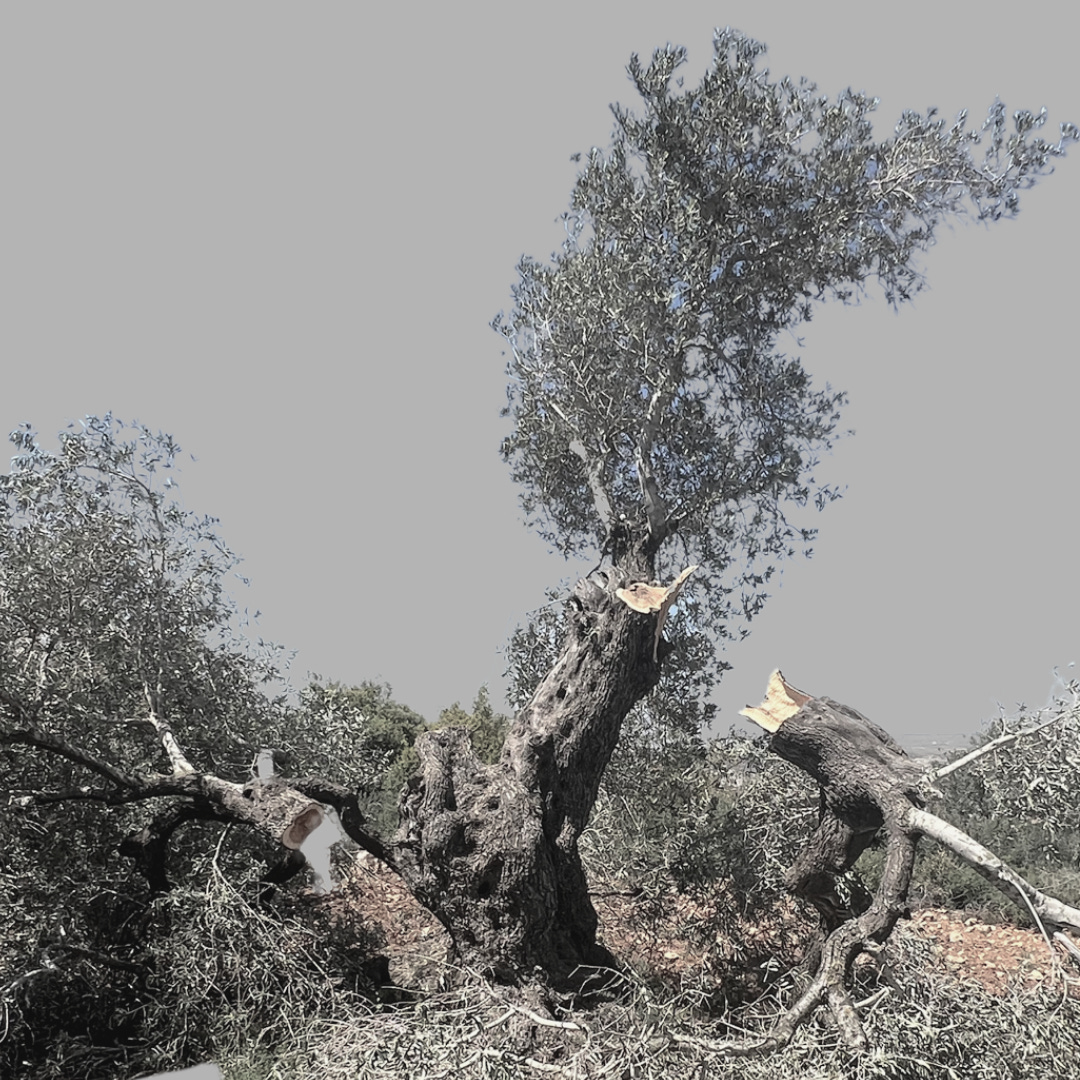
Time has passed and it remains as hard a fact as the olive trees that the Israelis love to hurt.
#
There are many ‘Gazans’ that have lived barely a few kilometers away from their actual homeland for decades and decades, prevented by Israeli law from returning home. Their homes given over to the Israeli state. Golda Meir, the Israeli prime minister, lived in Hanna Ibrahim Bisharat’s villa. Zionist militias took the house in 1948 and Israel turned it into several flats. Meir lived in the upper one. Hanna Bisharat’s son, George Bisharat, an American citizen, went to visit his grandfather’s house in 1977. George was met by an old woman, a Jewish woman from Eastern Europe. She told him that his family ‘never lived here.’
Just like that, she decided that George’s grandfather never existed. My grandfather also never existed.
I am also the grandson of non-existence.
#
Golda Meir once declared that there is no such thing as a Palestinian. Golda Meir also once said ‘I am a Palestinian’ as she carried a Palestinian passport during the British mandate.
She lived in a house that was Palestinian and then not Palestinian. Just like her. Just like my grandfather.
#
Another man then came to the door. It was retired Justice Zvi Berenson of the Israeli Supreme Court. Berenson was born in Safed, Ottoman-era Palestine. He was one of the drafters of Israel’s Declaration of Independence. He was also one of the judges who upheld laws facilitating the theft of Palestinian lands. An Israeli Supreme Court judge agreed to legalise the theft of Palestinian homes – and then moved in. He witnessed his Palestinian neighbours getting forced out of their homes, legislated to make sure they stay out, and then moved in.
Berenson did let George in – but only to the foyer. No further. “There was no need to see any more of the house as it had all been changed anyway,” he told George.
Just like Palestine. Just like my grandfather.
#
I’ve been to the border with that state that declared independence from God knows what many times. A friend lived in one of the southern Lebanese villages, another friend lived in another village, and another friend lived in another village. Israel destroyed them all, not in 1948, but in 2024, because the Israelis have been declaring independence from God knows what for a very long time.
The Israelis sent entire villages back to non-existence.
They have declared olive trees independent from their inconvenient roots. So many olive trees, inconvenient olive trees with inconvenient roots in an inconvenient land that was cared for by our inconvenient, non-existent grandparents.
Why do they hurt olive trees?
#
Power is getting to decide who lives, who dies, who gets to come, who gets to leave, who gets that villa, who doesn’t, which olive trees are good/Jewish, and which are bad/Arab.
Israel said that some Palestinians could go back, that my grandfather could not. It’s that simple, and yet decades of talking heads have been explaining why olive trees are being uprooted and how it's because of a very complicated conflict where History with a capital H meets Politics with a capital P and also Jews and Muslims and sometimes Christians and it’s the most crisis-y crisis of the many crises of the crisis-ridden Middle East and it’s all so, so complicated
Why do the Israelis hurt olive trees?
Throughout the occupied West Bank, Gaza and south Lebanon, the olive harvest is often stopped by the Israelis. They set the trees on fire, let them rot, or just bulldoze them. They’re doing it again as I write these very words. An olive tree doesn’t speak Arabic. It’s not Christian or Muslim, or pan-Arabist or socialist or Islamist. An olive tree doesn’t know who the Nazis are, and what the Europeans did to European Jews over there. The Israelis even call it zayit in Hebrew which isn’t that different from zaytoon as we call it.
The natives of this ancient land are made to watch as the land is torched by those who desperately want to be its natives. The land must be punished for settler colonialism to work. Displacing or killing the people on that land – that’s not enough. Traces remain. Traces have to be destroyed. If there never was such a thing as a Palestinian then anything or anyone with such a name cannot be. The only safe dwelling for a Palestinian is in non-existence. Israel might keep what it wants of land and people. There is no need to see any more of Palestine as it had all been changed anyway. Keep the food, keep the olive trees, or some of them anyway, and get rid of the rest.
Punishing the Land

Hauntologies essays and articles are mostly free but some are paywalled. To gain access to all of this websites’ archives, please consider a paid subscription. By doing so, you will gain access to all the archives.
#
When I go to southern Lebanon, I make it a point to stand as close to the border that was carved in 1948 as possible. I never liked borders. Can you blame me? Look at Lebanon on a map. Pause reading this and look at where I grew up. Open Maps, use that little yellow figure on the bottom right, and drop it as close to the Israeli border as possible. I do that a lot. I drop that figure on the point of the map that represents me, and I thank the heavens that an Israeli drone isn’t currently around to drop something else on the point of the map that represents me.
#
The land wasn’t informed of the decision to carve it. People in the West made that decision. People with very short-term memories used force to enclose History – that's with a capital H – itself and they have been spending decades erasing those with longer memories – like people and olive trees and the inconvenient uprooted grandson of non-existence writing these words.
I imagine trees communicating with those on ‘the other side’ through their roots before 1948. Something about mycellium. I barely understand it, but it feels like a smart way to go about things. Some trees probably kept these roots going for longer than our grandparents were able to. Maybe some of them saw my grandfather crossing the land above them before people equipped with History with a capital H decided that to the south of this point on the land shall be a state called Israel. That’s why the Israelis keep on punishing olive trees, and why my grandfather could never go back.
#
I started this story with the land because it doesn’t have to ask anyone for permission to just be and I envy that. My parents and grandparents and their parents and grandparents have all been forcibly displaced once or twice or ten times for longer than the age of many olive trees. No one asked them for permission to no longer be.
2
What breaks me to this day is not that Israelis are capable of genocide, or that they know how to bomb, or torture or exile or maim or humiliate or rape or bomb and bomb and bomb. I expect nothing less of them anymore. They treat us like they treat those olive trees, like they treat the land. It makes a lot of sense to me. They want to keep our non-existence as far away as possible, keep us from getting some of that History with a capital H. If we get some of it, they fear, they get less of it.
We are the untermenschen to their lebensraum and those who desperately want to belong to this raum don’t want us ruining their leben. But what they don’t understand is that keeping us unter for so long puts us in conversation with roots like those zayit/zaytoon/olive trees that they keep on hurting because roots also live unter it all and they are also crossed by borders that uproot them again and again and are also sent to non-existence alongside Palestine and my grandfather and his grandson writing those words. It gets easier to understand these fellow dwellers of the subhuman realm, and through these conversations I get to better understand those who fear us dwellers of the shadows, the hauntings haunting History with a capital H.
#
What breaks me is that there used to be a train from Haifa to Beirut, and Beirut to Haifa.
I don’t know if my grandfather ever boarded one of those. Maybe his parents did. People traveled between Haifa and Beirut all the time. That alone breaks me. I’ve never been, I can’t go. Wrong passport. There are no more trains anyway.
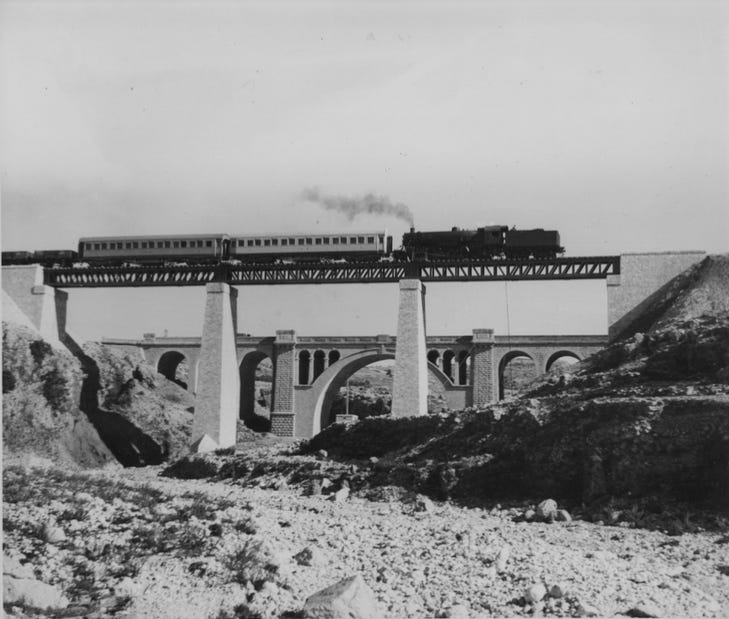
Boarding a train, sitting on a train. That’s it. Being able to see the Mediterranean sea – to my right of course as I’m going south to Haifa.
#
Trains, especially the nice ones, allow me to lose myself.
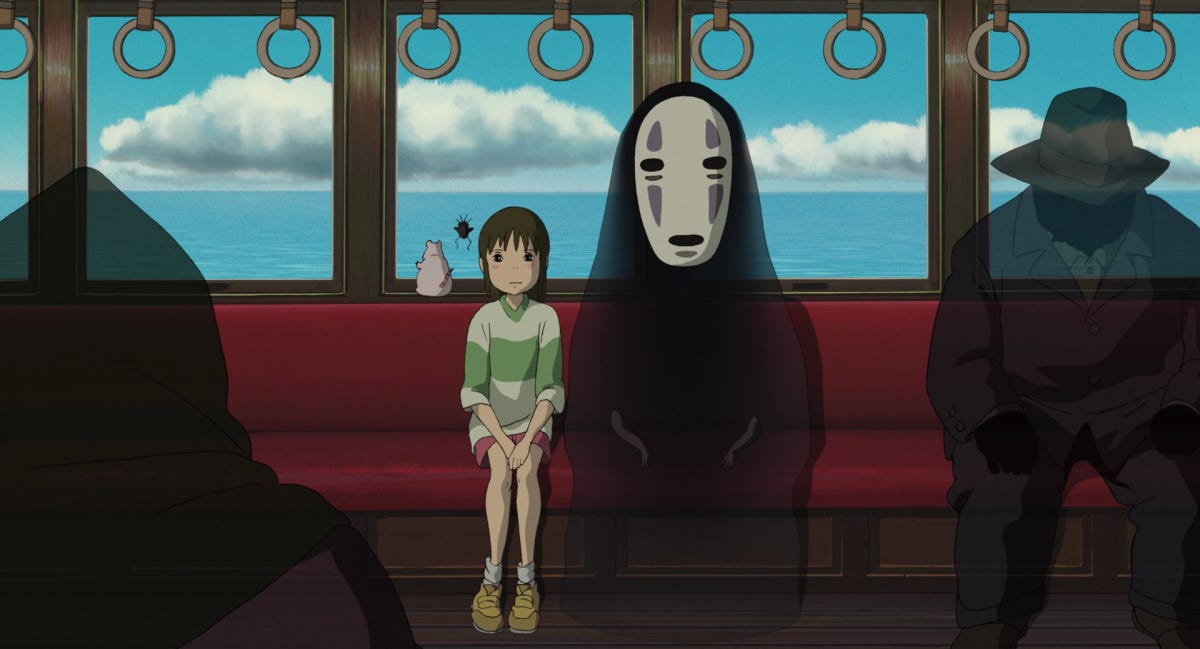
Maybe the train my grandfather took was one of those trains, like the one in that scene in Spirited Away. The little girl Chichiro and her spirit friend No-Face are sitting on a train going somewhere. As the ghostly passengers progressively leave the train, they end up alone. Chihiro is pensive, taking in the scenery and reflecting – I imagine – on her life so far. She was told it was a one-way ticket, but somehow she knew that she could go back. I envy the part of her that knew and I like to imagine one of those what if-s of history that would have allowed my great-grandparents and the boy that became my grandfather to just do that. Board a train, sit on a train. Wait, enjoy the view, get up, get off the train.
#
I never got used to trains. I’ve been taking them for a decade since moving to Europe. I did London-Edinburgh-London a dozen times. No one ever stopped me. Why would they stop the boy that became my grandfather? He was just a boy. Sure, he spoke Arabic (unlike the olive tree) and was a Christian (unlike the olive tree) but he wasn’t pan-Arabist or socialist or Islamist. He didn’t know who the Nazis are, and what the Europeans did to European Jews over there. He was just a boy, like those kids in Gaza forced into hunger for the crime of haunting History with a capital H.
#
I was always terrible at positioning myself on the map, but growing up in Lebanon was not a problem. If I get lost, I just have to locate the sea, make my way to Beirut, and then from Beirut make my way up to my village. If I am north, the sea has to be on my right to return to Beirut. If I am south, the sea has to be on my left. That’s why even today, in exile/diaspora, I have to know where the sea is at all times lest I fall into non-existence.
I am told those who live in Haifa today have the same relationship to getting lost. If you get lost, you just have to locate the sea. If you are north, the sea has to be on your right to return to Haifa. If you are south, the sea has to be on your left.
To me, the sea seemed reliable – or perhaps reliable enough that I never felt the need to question it. The other two borders, the only other two borders that Lebanon has, are Syria and Israel. It won’t shock you to know that they were not reliable.
When I did Edinburgh-London, the sea, the Atlantic one, the channel, the same sea as my Mediterranean sea as all seas as part of the sea called the ocean anyway, was on the left. When I did London-Edinburgh, it was on the right. I would orient myself like I would in Lebanon. I didn’t have to. I could just sit and the train would do the rest. But I did. Old habits.
#
I don’t know how to explain always knowing, whatever happens in my life, whatever dreams or aspirations or insecurities or quirkiness I may or may not develop one day, that there is a hard limit to driving with the sea on my right as that took me to the Israeli border, and, until Assad’s downfall in 2024, a more or less hard limit to driving with the sea on my left as that took me to the Syrian border.
The Edinburgh-London trips had no rigid land border, no wall of machine guns and drones and other civilised tech that I’d inevitably hit if I forgot to stop driving for too long with the sea on my right.
#
Once, I was driving with a friend with the sea on our left. We drove for too long. We almost reached Syria. We turned back. We saw Assad’s bombs in the distance. It’s really that easy to reach the hard limits. I never even tried to drive too close to the southern border and I have a feeling you know why.
Lebanon is one of the smallest countries in the world. I’ve never experienced a place called Lebanon without hard limits. I’ve never experienced a place called Palestine, but I can tell you what non-existence feels like.
#
It's a decade ago. I’m with friends in my village in Mount Lebanon. I didn’t get lost that day, didn’t need Beirut or the sea to find my way home. We want to order pizza. I zoom out on Google maps for like two seconds and I’m already in not-Lebanon. There is nowhere else to go. Even the sea betrays me in the end, that false friend. I order food and my slippery fingers zoom out for too long on that map and I’m reminded that this spot on the planet, the one where I’m hanging out with friends, ordering seven pizzas, watching a movie or playing some game or something, is just that, a spot.
Don’t venture too far from that spot. Remember where the sea is. Remember to stop.
I had to stop. When I zoomed out I saw that place down there, Israel, where the bombs come from, where my grandfather came from, Palestine. The road is so easy to build from Beirut to Haifa, most of it is still there, it just stops you know where and drones drop big things on me if I try, and the worst of it all is that drones also need to locate the sea. To bomb Gaza from Israel, the sea has to be on your right or in front of you. To bomb Lebanon, the sea has to be on your left. They don’t have to stop at you know where because it isn’t for them – the border is for the rest of us.
#
See Gaza on that map? They don’t even get full lines. It’s a porous border, as long as you’re an Israeli soldiers/tank/jet/drone. The map is from that perspective. That’s the default map on Google.
If you based it on the experience of Palestinians, those lines would be the thickest lines imaginable. But we don't get to draw those lines. We get to endure them.
#
What the map cannot show is what it feels like to be a ‘Gazan.’ Maps are shit at telling you what it feels like to be on one side and not the other.
The bombs keep on falling. Palestinians in Gaza go further and further south, further and further from the land that was their land. It’s never that far though. The whole territory is so small. All of it. Where the Israelis are, and where the Palestinians are. The entire thing is a bit bigger than two Lebanons, and I already told you how small Lebanon is.
#
The Israelis could just let Palestinians go home. They just don’t want to.
Palestinians would ruin this raum with all this leben they keep on doing. They keep on living, and that is very inconvenient. Meanwhile, the rest of us get to pretend that this is a very complicated conflict where History with a capital H meets Politics with a capital P and also Jews and Muslims and sometimes Christians and it’s the most crisis-y crisis of the many crises of the troubled Middle East and it’s all so, so complicated — when in fact it was always about letting the boy that was my grandfather on the train and telling him to make sure the sea was to his right.
3
I grow up a little bit. I’m 34 years/centuries old now. I’m already older than many olive trees because Israel never stopped cutting those down.
That makes me an elder. An elder is someone who is older than olive trees.
#
I’m on a train now, but not the one I want to be one, the one that I dream of taking one day and if I never manage, who knows, maybe my child will one day. She's two years old now. I will teach her to look for her roots amongst the olive trees.
I am watching Spirited Away. I don’t want to be Palestinian or Lebanese or Arab or Brown guy right now.
Leave me alone for a bit.
At least for that train scene.
#
In Spirited Away they present their tickets, and then just sit down. I can’t even tell if they’re going north or south or east or west or if these things matter over there. The magical train is entirely surrounded by the sea. It's neither left nor right. The passengers don't worry about such trivial things. Save me a seat. Please.

I just re read this via email where I had saved it. I was shocked to realise it was recent because it feels ancient. As the land. I'm a queer white woman who decided for reasons still unknown to me decided to explore the faith of my youth. I obviously needed to argue with the cosmos at 67years of age. I'm a volunteer at a place that unlike most Christian ngo's still holds a chapel on Sundays. If youre not much of a Christian we say, we are not much of a church. We say Love over Hate. No us and them. The rough sleepers who sit down after a shower fresh undies & socks, some of them can quote the Bible verbatim. Some of the folks are deeply conspiracy minded. Some folk are "good". They came to help thrn realised they too were "poor in spirit" so they come too. All I want to do is read this letter tomorrow morning, but I will hold it in my head as I talk about the "poor in spirit" and somehow, Somehow talk about the olive trees.
Your words are so beautiful and they are not useless. We have to plant ideas with beautiful heartbreaking words. Thank you. Apologies for the ramble.